
Brighton kept selling their stars. Why didn’t they fall apart?
Tony Bloom’s club became famous for finding talent. The deeper story begins with the ground beneath their feet—and with a system that can survive an exit.

Every ambitious club wants to be “the next Brighton”. Find an overlooked player, make him better, sell him for a fortune, repeat. It sounds wonderfully simple—until the best players leave, the manager leaves too, and you have to win again on Saturday.
Brighton & Hove Albion have faced that test more than once. They reached the Premier League in 2017, finished sixth and qualified for Europe in 2022/23, and landed in the top half four times in the five seasons from 2021/22 to 2025/26. The names and the football changed along the way. The club kept giving itself another chance to compete.
So how did a side once playing league football at an athletics ground get here? The familiar answer is clever recruitment. The fuller one starts before the famous transfers.
Before the clever signings, there was a ground to build
Tony Bloom became Brighton chairman in 2009, but he was not arriving as a detached investor with a spreadsheet. He had grown up an Albion supporter; his grandfather Harry had been the club’s vice-chairman. Bloom was also a mathematics graduate and a sports-betting entrepreneur, comfortable thinking about probabilities. Those parts of his background help explain the club’s reputation. His first transformative decisions were rather more concrete.
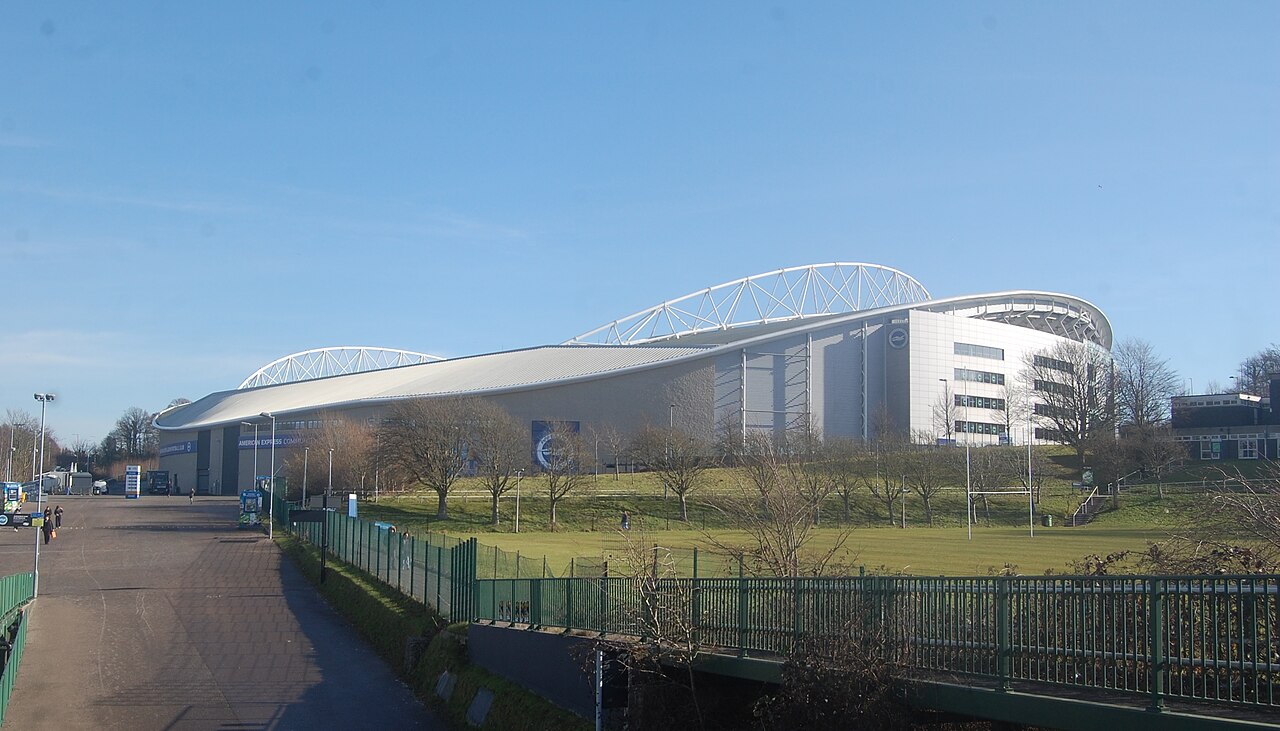
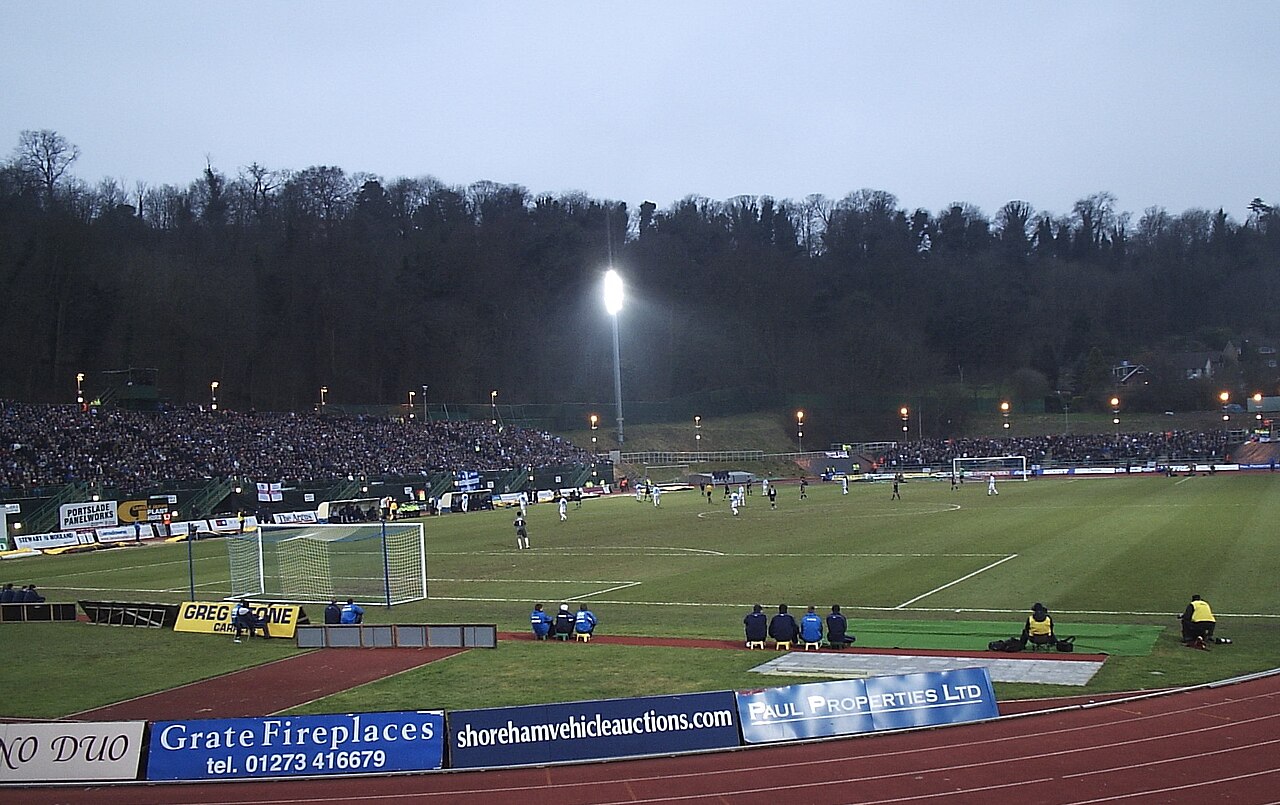
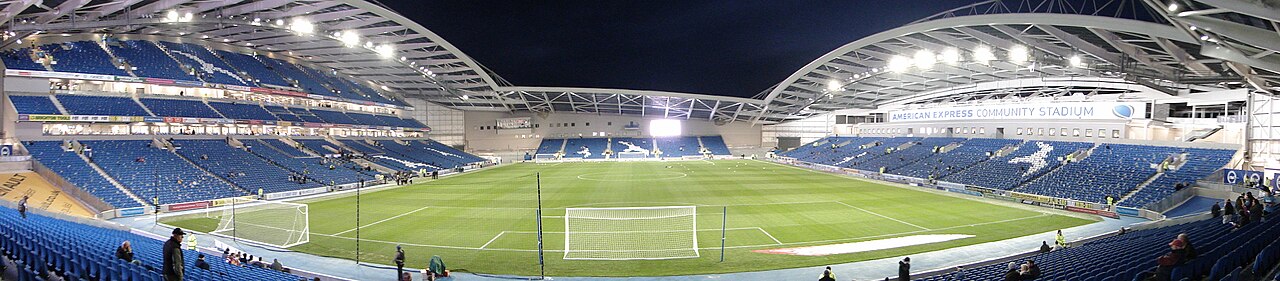
Brighton had been playing at the Withdean, an athletics venue with an awkward matchday feel. Financing a new stadium was a serious obstacle, especially around the financial crisis. Bloom funded the Amex, which opened in 2011, and the training centre that followed in 2014. The club won League One in 2010/11; six years later, it reached the Premier League.



Those buildings did not scout a left-back or coach a midfielder. They did give Brighton a larger, more durable platform for doing both. Promotion then brought Premier League broadcast money. Any explanation that attributes the rise entirely to a secret algorithm misses the capital and the change of league around it.
The real trick is replacing what leaves
Brighton’s recruitment reputation has substance. The club identifies players, gives them minutes and coaching, and has often been willing to sell when a much richer side comes calling. But recruitment alone is a shopping list. The hard part is having the next player—and sometimes the next manager—ready while the first is still making headlines.
Consider 2022. Graham Potter left for Chelsea, as did Marc Cucurella. Roberto De Zerbi came in; Pervis Estupiñán was among the players brought through the succession plan. Brighton did not merely survive the departures. They finished the 2022/23 league season sixth with 62 points and qualified for European football for the first time.
Bloom has discussed using mathematical principles in recruitment. No outside observer can see the club’s proprietary models well enough to assign them a precise share of the success. What we can see is the pattern: capital first, promotion, scouting and development, sales, then replacements. It is an institution at work, not a magic formula.

The league table shows success. It also hides some bumps.
Brighton went from ninth in 2021/22 to sixth the following season, then 11th, eighth and eighth. Four top-half finishes in five years are hard to dismiss as a one-season hot streak. But the two eighth-place finishes were not identical: 61 points in 2024/25 became 53 in 2025/26. The rank stayed the same while the points fell by eight.
Five seasons, four top-half finishes
Brighton’s final Premier League points. The 2025/26 eighth place came with fewer points than the previous eighth-place finish.
Source: Premier League final tables and Brighton season reviews. Bars start at zero.
Finishing can flatter a season as well. Brighton’s own analysis estimated that the 2024/25 side scored 66 league goals from chances worth about 59 expected goals. The next season brought a lower points total but 13 fewer goals conceded. Those are different ways to arrive near the same spot in the table. A good operation can still have noisy individual seasons.
Sales fund the next bet—but the accounts are not a straight line
The club’s finances make the cycle visible. Turnover climbed from £29.2 million in its last Championship season to £222.4 million in 2023/24, excluding a property development. That is about 7.6 times as much revenue. Most of the comparison crosses the boundary into the Premier League and its broadcast deal; it should not be presented as proof of recruitment efficiency alone.
Brighton reported £122.8 million after-tax profit in 2022/23. The major sales of Moisés Caicedo and Robert Sánchez came after that financial year and affected the following accounts, which showed £73.3 million operating profit before interest and tax. In 2024/25, after heavy squad investment and higher player amortisation, the club reported a £54.4 million operating loss before interest and tax. Brighton still finished eighth with 61 points.
The numbers need their labels
These are different accounting measures across different years; they are shown as context, not as one comparable profit series.
That is what reinvestment looks like in a football club: a sale is not a guarantee of annual profit, and an accounting loss is not by itself evidence that the sporting model has stopped working. Timing matters, too. A player sold just after 30 June belongs in the next financial year’s story.
So what can another club actually copy?
Scouting better is the tempting answer. Brighton’s harder lesson is that recruitment works best when the club can develop players, tolerate exits and plan replacements before a hole appears. Bloom’s investment in the stadium and training centre, followed by Premier League income, gave that cycle room to operate.
There is no public dataset that tells us the exact value of Brighton’s private algorithms. Nor has the climb been perfectly smooth. What makes the last 15 years striking is that the club has stayed competitive after repeatedly changing the people on the pitch and in the dugout. The next star may leave. The more important question is whether the club already knows what comes next.
Reporting notes & photo credits
This football feature adapts the private Brighton research report dated 28 September 2026. Figures refer to completed seasons through 2025/26. The source links are retained for review; this is editorial football analysis, not a betting recommendation. Images are embedded for offline viewing; their original Wikimedia Commons pages and licence credits appear in the captions.
- Brighton & Hove Albion: Tony Bloom biography
- Premier League: 2017 promotion
- Premier League: Brighton’s journey to Europe
- Brighton: 2022/23 accounts
- Brighton: 2023/24 accounts
- Brighton: 2024/25 accounts
- Brighton: 2024/25 season review
- Brighton: 2025/26 season review
- Premier League: 2025/26 table
- University of Brighton: Bloom on the club and recruitment