
The verdict is only
the beginning.
Appeals, sanctions and the next five seasons: how a legal decision could change City’s football—and what Chelsea’s experience really tells us.
City’s biggest danger is a sanction that starts a second, sporting decline. A points deduction can damage a season without instantly destroying the team. The lasting risk is that it costs European qualification, accelerates departures and disrupts a leadership transition already under way.
My central planning case is a material but recoverable setback over one to three seasons after a meaningful sanction, provided City remain in the Premier League, retain committed ownership and avoid repeated changes of football leadership. That is a conditional football assessment, not a prediction of the penalty. If the core findings survive substantially, treating a small fine as the default would understate the seriousness of the case. Relegation or exclusion would require a different forecast.
As at 7 October 2026, this is a case with published first-instance findings and an appeal, but no published sanction identified in the reviewed official record. The Commission found extensive financial misconduct; City disputes those findings. Neither a clean acquittal nor a settled punishment is the starting point. [1][2][3][4]
Chelsea is a useful warning about organisational disruption, but a poor model of money simply disappearing. Its post-2022 experience includes heavy investment, a collapse, a recovery and another setback. Juventus better illustrates relegation; Everton shows why points earned and points awarded must be separated. None gives City a ready-made recovery timetable.
Confidence: high in the cited public status and completed-season results; moderate in the causal mechanisms; low in the eventual legal outcome, effective season and exact future league finishes. No numerical probabilities are assigned.
There is a verdict. There is not yet a final outcome.
The published Core Decision groups the allegations into broad charge categories rather than offering a simple “115” scoreboard. It finds deliberate misstatement of income and costs, spending-rule breaches and most cooperation allegations proved; Charge 4(B) was not proved. Its findings remain subject to appeal. The published 40-page document points to extensive appendices that were unavailable for this review. It does not permit an independent reconstruction of every evidential dispute. [2]
The Premier League investigation begins. [1]
The League refers alleged breaches to a Commission: financial reporting and remuneration issues in historical seasons, UEFA and domestic financial compliance, and cooperation with the investigation. The referral specifies the rules then applicable. [6]
The 42-day merits hearing concludes. Expectations of a spring 2025 verdict were forecasts, not a binding completion date. [1]
Publication of the redacted Core Decision. Sanction is expressly reserved for a separate hearing. An earlier appeal about publication/finality does not mean the merits appeal has already been decided. [1]
City says it filed at 19:00 on 1 October, alleging errors of law, principle and fact. The Premier League confirms the appeal on 2 October. [4][3]
No subsequent published merits appeal ruling, sanction order, effective date or public hearing date was located. Confidential directions may exist; absence of publication is not evidence that nothing is happening.
The main case concerns historical conduct and cooperation. The APT rules dispute concerned the lawfulness of commercial-transaction rules and ended in a September 2025 settlement. The UEFA/CAS case ended in 2020 with the European ban overturned and a €10m non-cooperation fine retained; several allegations were unproved or time-barred. A victory in either separate process does not dispose of the present appeal. [12][13]
The Independent Football Regulator is a fourth, distinct consideration. On 30 September it said it would await developments while noting its powers to assess individuals’ suitability. That is consequential scrutiny, not an announced owner-removal order or a forced sale. [14]
“Twelve weeks” is a conditional timetable.
The current reference is the 31 July 2026 edition of the Premier League Handbook. The substantive offences must still be judged under the relevant historical rules. Public case-specific directions may affect procedure; the standard framework below must not be mistaken for a disclosed order in City’s case. [5][6]
Review the findings
Section W appeal: principally a review of the existing evidence. Fresh evidence needs permission and must satisfy the availability and reasonable-diligence test.
Determine sanction
A separate Commission hearing. A later sanction can itself be appealed; the findings appeal may also lead to variation or remittal.
Limited further challenge
Section X review on narrow grounds, then any qualifying court challenge to an arbitral award. No general CAS appeal.
Procedural map: W.76, W.88, W.92, W.96–97; X.4. A remittal sends an issue back for further decision. A sanction-only appeal does not automatically reopen liability. [7][9]
Under standard directions, an appeal hearing finishes within 84 days of filing, lasts at most five days and is followed by reasons within 30 days. W.84–85 allow those directions to be varied or disapplied. Counting from 1 October produces 24 December 2026 for the hearing and, if it ended then, 23 January 2027 for reasons. These are calculated benchmarks, not announced City dates. They do not cover all subsequent sanction or challenge stages. [5]
A realistic planning range is months for the first appeal, with the overall case capable of extending beyond this season. A remittal, separate sanction appeal or qualifying arbitration could stretch it further. There is no sound basis to promise resolution by Christmas or to assert an inevitable two- or three-year delay. Everton’s narrower first appeal ran from 1 December 2023 to 26 February 2024—87 days—but involved an admitted breach and a disputed penalty, not this evidential record. [48][49]
A sanction can operate during an appeal. Everton’s November 2023 deduction took immediate effect and was later reduced. An appeal is therefore not a blanket protection against sporting consequences. For City, the sequencing of sanction and liability appeal, the implementation order and any stay must be checked when published; no City-specific stay is established here. [47][49][11]
How far can court proceedings go?
Section X allows review for defects such as jurisdiction, serious procedural unfairness, bad faith, perverse legal interpretation or an unreasonable decision. A court challenge to an arbitral award is narrower still: Arbitration Act sections 67 and 68 address jurisdiction and serious irregularity; X.50 excludes a section 69 point-of-law appeal from Section X arbitration. This is not an unlimited second trial. [7][9]
There is a genuine interpretative difference in the reviewed legal commentary. Leathes Prior discusses possible direct court proceedings concerning Section W decisions; Mills Chody stresses the need first to identify an arbitral award and satisfy the applicable statutory gateway. No such City filing or permission was verified. The forecast includes delay risk without assuming that every proposed route is available. [10][7]
The same deduction can have very different consequences.
| Outcome | Legal position | Football transmission |
|---|---|---|
| Findings reversed or narrowed | The Appeal Board can allow, vary or remit. Narrowing does not necessarily remove all sanction exposure. | Uncertainty falls. Recruitment and renewals become easier to plan; ordinary sporting transition remains. |
| Financial penalty | W.64 permits an unlimited fine; compensation and costs are distinct exposures. | Limited immediate playing effect if funded without cutting football operations. A sufficiently large combined bill could change that assumption. |
| Points deduction | Express power over points scored or to be scored. No tariff for this case has been established. | Immediate table damage; delayed income and recruitment damage if qualification or survival thresholds are crossed. |
| Relegation through a deduction | A deduction could put City in the bottom three. Direct compulsory relegation is not an expressly named sanction; broader powers raise a separate legal question. | Lower league revenues and recruitment appeal; retention and a coherent promotion team become decisive. |
| Suspension or exclusion | W.64 permits match suspension and a recommendation for expulsion under B.6. The latter requires the specified three-quarters membership vote. | A potentially much deeper interruption. Expulsion does not itself secure a Championship place; admission elsewhere needs a separate resolution. |
Rule basis and interpretative limits: [5][8]. These categories can combine. Penalty size cannot sensibly be calculated by multiplying a headline charge count by Everton’s deduction.
How much does the table move?
Hold every 2025/26 result and goal difference fixed. City earned 78 points and finished second. Change only an illustrative deduction. This is neither a proposed penalty nor a forecast. [15]
Outside that season’s top-five Champions League places. Cup qualification routes are not modelled.
For reference: 10 deducted → 68 points / 3rd; 20 → 58 / 5th; 22 → 56 / 6th; 40 → 38 / 18th. City is removed from its original place before ranking all 20 clubs again. Goal difference breaks relevant ties; cup routes are held outside this illustration. Future qualification rules, rivals and behaviour may differ.
The relevant threshold is the gap to a title, a European place or survival, not whether a deduction sounds “small”. A title-costing penalty could leave City’s revenue base largely intact; a larger one could remove a year of Champions League football; a relegating one changes the operating environment altogether.
A Premier League sanction does not automatically impose a UEFA ban, dissolve player contracts or remove the owner. European licensing and discipline, individual suitability and private contract rights need their own legal basis. Sporting failure to qualify for Europe is a separate mechanism and needs no UEFA ban. [24][14]
Start with the City that exists now.
City’s last two completed league seasons yielded 71 and 78 points, following 91 in 2023/24. In 2025/26 it finished second and won both domestic cups. Those results support a strong starting platform, but not an automatic return to 90–100 points. [16][15][36]
All eight seasons contain 38 league matches. Neither club has a deduction in this series. The shading marks Chelsea’s first full season under its new owners; it does not identify a causal effect. Sources: Premier League historical tables and final 2025/26 table. [5][15]
The no-proceedings comparison should be a high-quality side capable of Champions League qualification and a title challenge, with meaningful transition risk. It should retain ageing, injuries, rival improvement and management changes. Maresca was appointed on a deal to 2029; Hugo Viana had already succeeded Txiki Begiristain in football leadership. Those changes belong in the baseline unless evidence shows the case caused them. [18][19]
There is evidence against an assumption of immediate recruitment paralysis. City secured Haaland to a publicly announced 2034 end date, then added Semenyo and Guéhi in January 2026. These commitments predate the adverse findings, so they demonstrate resilience during uncertainty, not immunity to a severe sanction. No private escape or relegation clauses have been verified. [20][21]
| City season | Played | Earned / adjusted | Place | Goal difference | European campaign / main honours |
|---|---|---|---|---|---|
| 2022/23 | 38 | 89 / 89 | 1st | +61 | Champions League winner; Premier League, FA Cup |
| 2023/24 | 38 | 91 / 91 | 1st | +62 | Champions League quarter-final; Premier League, UEFA Super Cup, Club World Cup |
| 2024/25 | 38 | 71 / 71 | 3rd | +28 | Champions League knockout play-off; Community Shield |
| 2025/26 | 38 | 78 / 78 | 2nd | +42 | Champions League round of 16; FA Cup, League Cup |
League figures: [5][16][15]. European progress: [51]. Honours and recent outcomes: [36][17][22]. The summer 2025 Club World Cup is separate from the league comparison.
Four different kinds of financial strength
City reported £694.1m revenue, £173.7m cash at bank and in hand and £408.4m total employee costs for the year ended June 2025. UEFA broadcasting contributed £70.7m; player-registration additions were £352.9m and annual amortisation £169.5m. These show scale and commitments, not a current transfer budget. The latest report located is a historical snapshot predating this decision. [22]
Existing facilities and players are productive resources. Liquidity is the ability to meet near-term bills. Owner willingness determines whether more funding is supplied. Regulatory spending capacity is a separate constraint: an owner can fund cash needs without making every extra pound count as permissible football revenue. Nor can the historic findings simply be projected onto today’s sponsorship values.
From 2026/27 the Premier League’s SCR and SSR rules replace PSR for current operations, while historical enforcement remains. The domestic squad-cost green threshold is 85%, with a multi-year allowance initially taking the red threshold to 115%; UEFA’s parallel squad-cost limit is 70%. The definitions and tests differ. The domestic system also uses pre-agreed in-season revenue estimates, so a revenue shock does not automatically trigger an immediate in-season recalculation. Its consequences emerge through later accounts, remaining allowance and future budgets. [23][24]
| When | Mechanism of damage | What could offset it? |
|---|---|---|
| Immediately | Adjusted points fall; title or qualification objectives change. Staff face legal distractions and questions from players and sponsors. | The squad’s ability is initially intact. A shared sense of grievance might help effort, although this is an unmeasured possibility. |
| Next transfer window | Players and agents price uncertainty into renewals, wages and destination choices. Forced sales can reduce both depth and bargaining power. | Long contracts, credible leadership, targeted recruitment and clear funding commitments can preserve a strong core. |
| Following season | Missing Europe reduces broadcast and matchday income; sponsorship bonuses may fall. Fixed wages and amortisation adjust slowly. | Fewer fixtures can improve recovery and coaching time. Academy minutes can build value. Neither benefit automatically offsets weaker recruitment. |
| Two to five seasons | Repeated European absences and poor replacement decisions can compound: a weaker squad misses Europe again, tightening the next budget. | Stable football leadership, successful young players, restored qualification and commercially resilient contracts can break the cycle. |
Mechanism table: analytical inference, not a measured causal estimate. Sponsor penalties, salary reductions, transfer-release rights and owner exit intentions are unknown unless disclosed.
The revenue exposure is more than a prize-money headline: UEFA broadcasting, home matches and commercial bonuses are different streams. Conversely, fewer matches save some costs. The reported £70.7m is an observed annual UEFA broadcast component, not a forecast of net loss from a future exclusion. A club without Europe also has to plan a compliant return; regulatory flexibility does not erase the loss of revenue.
The money stayed. The organisation changed.
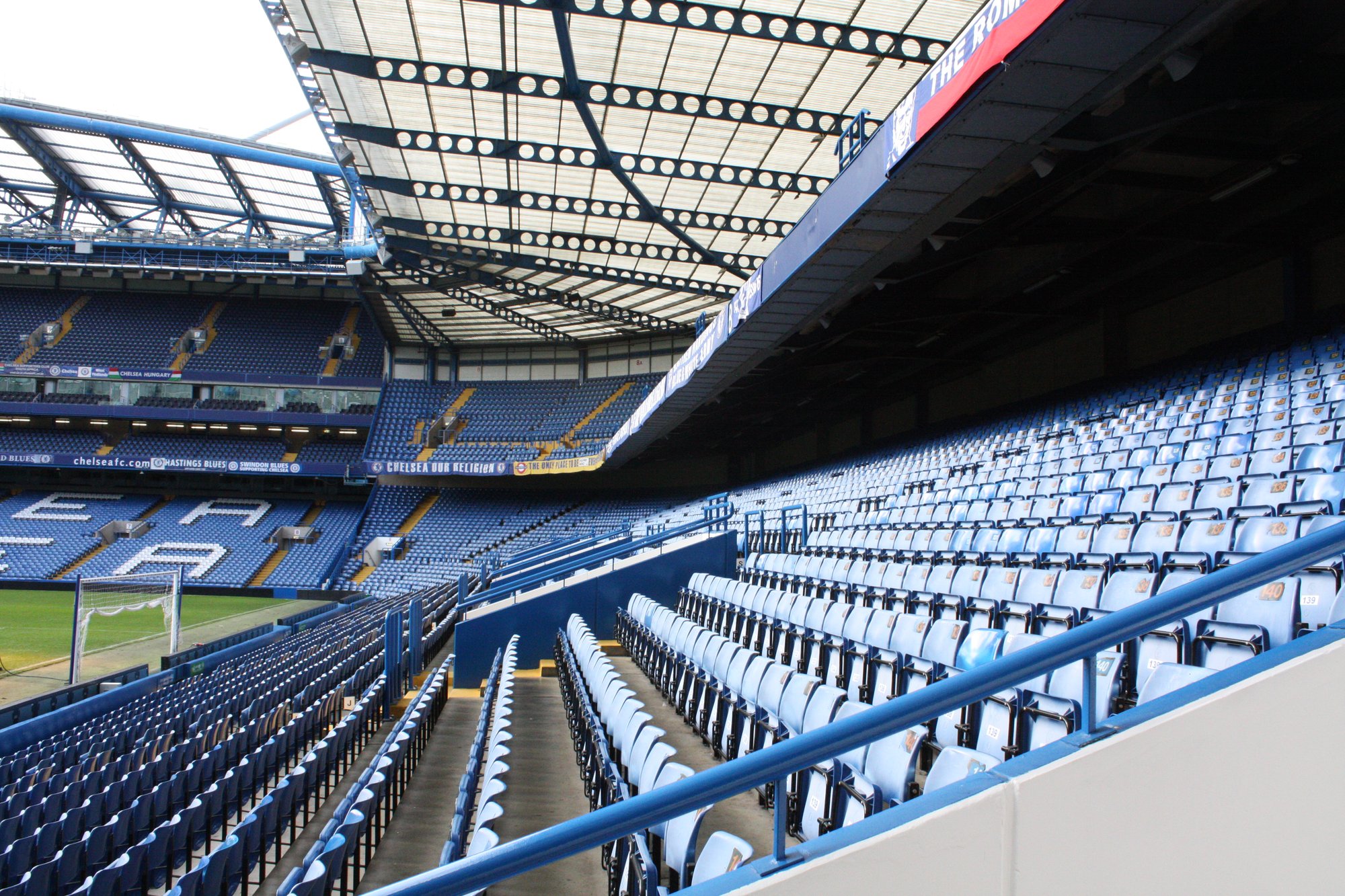

Chelsea’s shock was materially different. UK sanctions on Abramovich on 10 March 2022 restricted how the club could operate; the government granted a licence to keep football going. The ownership transfer completed on 30 May. That compressed political and sale process is not an automatic consequence of a Premier League disciplinary decision. [25][26]
The pre-event baseline matters. In the three complete seasons before 2021/22, Chelsea earned 72, 66 and 67 points—an average of 68.3, calculated here—and finished third, fourth and fourth. It was already below consistent title-winning pace despite winning the Champions League. The 74-point 2021/22 season partly overlaps the sanctions shock and should not be treated as a pristine control year.
| Season | Earned / adjusted | PPG | Place / GD | Europe played that season | Honours / context |
|---|---|---|---|---|---|
| 2018/19 | 72 / 72 | 1.89 | 3rd / +24 | Europa League: winner | Europa League |
| 2019/20 | 66 / 66 | 1.74 | 4th / +15 | Champions League: last 16 | No senior men’s trophy |
| 2020/21 | 67 / 67 | 1.76 | 4th / +22 | Champions League: winner | Champions League |
| 2021/22 | 74 / 74 | 1.95 | 3rd / +43 | Champions League: quarter-final | UEFA Super Cup; Club World Cup played February 2022; sale in May |
| 2022/23 | 44 / 44 | 1.16 | 12th / −9 | Champions League: quarter-final | No trophy; first full season after sale |
| 2023/24 | 63 / 63 | 1.66 | 6th / +14 | Did not participate | No trophy; Conference League qualification |
| 2024/25 | 69 / 69 | 1.82 | 4th / +21 | Conference League: winner | Conference League; Champions League qualification |
| 2025/26 | 52 / 52 | 1.37 | 10th / +6 | Champions League: last 16 | No trophy during the August–May campaign; FA Cup runner-up |
38 matches each year. PPG = points earned ÷ matches. No deductions in this Chelsea series. League data: [5][16][15]; participation and honours: [33][34][37][36]. Calendar note: Chelsea also won the expanded Club World Cup on 13 July 2025. It is recorded separately so a summer tournament does not silently change the league-season comparison. [35]
The initial decline was real: 30 fewer points and a swing from +43 to −9 in goal difference. But an explanation based on disappearing investment does not fit well. Accounts-based reporting put 2022/23 player acquisitions at about £747m. [28] Such acquisition cost is not the cash paid in that year or its annual accounting expense.
The stronger explanation is a difficult organisational and squad reset. The new board announced Granovskaia’s departure and Boehly’s interim sporting role in June 2022. Coaching then passed through Tuchel, Potter and interim arrangements in 2022/23, Pochettino in 2023/24 and Maresca in 2024/25. The football plan and player mix changed together. That is a plausible source of poor fit and lost continuity, not proof that every change was mistaken. [27][33]
The scale of the reset is visible in player use: 21 players made first-team debuts in 2023/24, including academy entrants; 18 were 23 or younger. In 2024/25 the average league starting XI was aged 24 years and 36 days. These are measures of turnover and youth, not counts of purchased players. [53][52] The subsequent recovery makes it wrong to describe the rebuild as uniformly unsuccessful.
Injuries are a substantial competing explanation: the club reported 14 absences for the May 2024 Tottenham match. Those absences affect what any coach can implement, but do not explain the whole multi-year pattern. [32]
The recovery prevents a selective story. Chelsea returned to roughly its earlier league-points level in 2024/25 and won the Conference League, followed by the Club World Cup. Yet that was not a stable endpoint: Maresca left on 1 January 2026, Rosenior was dismissed on 22 April, and the team finished tenth. In September 2026 the club announced a further ownership transition towards Clearlake control, while saying operations and strategy would continue. [30][31][38]
There are financial pressures too: Chelsea’s own summary reported a £262.4m pre-tax loss for 2024/25, with the previous year’s profit affected by a subsidiary disposal. This is not a like-for-like measure of owner cash support or regulatory losses. It reinforces the need to distinguish spending capacity, accounting presentation and football effectiveness. [29]
That mechanism becomes more relevant if City respond to pressure with repeated leadership changes, poorly matched recruitment and accelerated turnover. It becomes less relevant if the owner, sporting leadership and coaching plan remain aligned. Chelsea’s case cannot establish the effect of a City deduction because it bundles political sanctions, a sale and subsequent football decisions into one history.
Promotion, recovery and resilience are different tests.
Juventus: a rapid return is not a complete recovery
After the 2006 Calciopoli proceedings, Juventus was relegated and ultimately carried a nine-point deduction in Serie B. The misconduct and Italian legal structure differ from City’s financial case. What transfers is the mechanism: a lower division changes revenue, recruitment and squad incentives. [39]
| Season | Level / matches | Earned → adjusted | Earned PPG | Place / GD | Recovery marker |
|---|---|---|---|---|---|
| 2006/07 | Serie B / 42 | 94 → 85 | 2.24 | 1st / +53 | Promoted; no European campaign |
| 2007/08 | Serie A / 38 | 72 → 72 | 1.89 | 3rd / +35 | Qualified for Champions League preliminaries |
| 2008/09 | Serie A / 38 | 74 → 74 | 1.95 | 2nd / +32 | Champions League participation restored |
| 2009/10 | Serie A / 38 | 55 → 55 | 1.45 | 7th / −1 | Recovery reverses |
| 2010/11 | Serie A / 38 | 58 → 58 | 1.53 | 7th / +10 | Another weak league season |
| 2011/12 | Serie A / 38 | 84 → 84 | 2.21 | 1st / +48 | Serie A title regained, unbeaten |
Sources, in row order: [41][42][43][44][45][46]. The 2011/12 row is included to show the eventual title recovery just beyond five seasons. PPG normalises match count, not the difficulty of Serie B versus Serie A.
Buffon, Del Piero, Nedvěd, Trezeguet and Camoranesi provided an unusually strong retained core. Promotion was immediate; sustained title strength was not. Subsequent coaching and executive changes complicate any claim that the sanction alone caused every disappointing season. City cannot assume the same loyalty, the same gap to second-tier opponents or the same route of admission if expelled. [40]
Everton: the table can worsen while the football improves
Everton earned 48 points in 2023/24 but finished with 40 after eight deducted, in 15th place with a −11 goal difference. Its earned rate was 1.26 points per match. This illustrates survival despite a sanction and the importance of measuring actual football output separately. It does not supply a proportionate penalty for City: the offences, admission of breach, scale, squad and financial position were different. [50][49]
These are the only additional club comparisons used. Juventus tests severe sporting displacement; Everton tests administrative versus underlying performance. Adding more club crises would broaden the story without resolving City’s most important uncertainties.
A forecast with conditions, not a promised finishing position.
T0 means the first season in which an effective sporting sanction affects the competition. T+1 is the following season. Financial and recruitment effects can begin before T0 if players anticipate the outcome. The scenarios below are analytical judgements, not legal probabilities or calibrated model outputs.
| Scenario and standing | Necessary conditions / timing | Football effect and duration | Recovery route / what would change it |
|---|---|---|---|
| A · Reversal or narrow residual caseUpside branch; legally open, likelihood unquantified | Appeal substantially removes the core findings; remaining sanction has limited sporting effect. Resolution before major renewals or recruitment decisions is most helpful. | No deduction-driven European gap, or a short disruption. Playing strength can stay close to the transition baseline over T0–T+1. | Retained core plus coherent recruitment. Weakened by continuing adverse findings, major departures or a new independent regulatory restriction. |
| B · Contained disruptionPlausible conditional branch | Finance-only outcome, or a deduction that leaves elite qualification intact; penalty affordable, owner and leadership remain. Prompt clarity. | Table or trophy ambitions suffer in T0; underlying squad largely preserved. Most incremental effects fade within one or two seasons. | Maintain payroll discipline and replace ageing players well. Overturned by liquidity stress, loss of Europe or recruitment failures. |
| C · Meaningful sporting damageCentral planning case if substantial findings survive and City stay in the PL | Deduction threatens or costs one European campaign; no automatic owner exit or mass exodus. A decision effective in 2027/28 is the calendar illustration below, not an announced date. | Immediate adjusted-table loss; budget and retention pressure through T+1–T+2. Material setback lasting roughly one to three seasons, with a possible longer tail. | Retain the core, avoid panic rebuilding and regain qualification. Faster recovery if recruitment and underlying results remain strong; worse if Europe is missed repeatedly. |
| D · Compounding declineCredible downside; requires additional failures | Repeated European absence, a repeated sporting penalty or extended uncertainty combines with leadership churn and poor replacement of departing players. | Earned points and chance creation weaken as well as adjusted position. Three to five seasons of underperformance becomes credible. | Rebuild sporting leadership and the squad on a sustainable budget. Two stable windows, strong retention and renewed qualification would weaken this forecast. |
| E · Institutional disruptionSevere branch; magnitude and legal route unresolved | Relegation, prolonged suspension or expulsion; potentially compounded by a separate governance intervention or withdrawal of support. | Immediate revenue and squad reset. Promotion and restoration of elite strength are separate milestones; damage can occupy most or all of the five-season horizon. | Secure the competition route, funding and a committed playing core first. Prompt readmission/promotion and retained quality improve recovery; they do not guarantee a title timetable. |
What the central case looks like on the calendar
Illustration assumes a meaningful deduction first affects 2027/28, costs 2028/29 European participation and is not repeated. If T0 occurs earlier or later, shift the sanction-related sequence, while leaving ageing and coaching transition on their real dates.
| Season | Ordinary no-case trajectory | Incremental effect in the central scenario | Decision test |
|---|---|---|---|
| 2026/27 Before T0 | Maresca adapts the team; injuries, rival strength and squad renewal still matter. | Uncertainty can affect negotiations and attention, but there is no verified deduction to subtract. | Are earned PPG and goal difference holding up after accounting for opponent strength and availability? |
| 2027/28 T0 | A strong squad seeks Champions League qualification and trophies. | Adjusted position falls despite potentially similar play; a qualification threshold is missed. | Is the loss mainly administrative, or are minutes and quality also leaving the squad? |
| 2028/29 T+1 | Normal refresh of core players; coaching contract decisions approach. | European income is lower. Fewer matches can help league preparation, but renewal and recruitment budgets face pressure. | Retention, regulatory headroom and quality of replacement signings. |
| 2029/30 T+2 | Leadership and recruitment quality shape the next cycle. | If qualification has been regained, income and recruitment appeal begin to recover; otherwise the downside branch strengthens. | European return plus stable underlying results, not a single cup run. |
| 2030/31 T+3 | Major uncertainty from ordinary football evolution. | Convergence towards the no-case path is plausible after good decisions; repeated disruption can still leave a durable gap. | Has the club restored a coherent, competitively strong squad without repeated emergency sales? |
Which explanation should lead?
City can absorb a contained sanction
Supported by scale, recent recruitment and existing talent. Strongest when qualification survives. Weakened by a cash squeeze or a lost core; wealth alone does not establish regulatory headroom.
Uncertainty slowly erodes the squad
Plausible if renewal delays and recruitment refusals persist across windows. Long contracts and successful signings already challenge its strongest version. Look for behaviour, not anonymous mood reports.
Leadership disruption causes repeated rebuilding
The most useful Chelsea mechanism. Stronger if City change coach, sporting director and recruitment priorities in quick succession; weaker if their existing transition proves coherent.
Ordinary transition explains the decline
The 2024/25 fall and 2025/26 rebound predate this verdict. Much fluctuation can arise without sanctions. This explanation weakens if a specific legal event is followed by departures and measurable budget cuts.
Resolution accelerates recovery
Credible if the final result is manageable and decisions delayed by uncertainty can proceed. Repeated adverse rulings or a relegating penalty would remove its key conditions.
The balance of evidence favours resilience of the existing team before it favours guaranteed resilience of future results. That is why a one-off setback is more defensible than an automatic five-year collapse under a contained outcome—and why substantial sporting exclusion cannot be dismissed merely because City are rich.
Watch decisions and commitments.
- The actual appeal directions and reasons. Scope, retained findings, remittal, sanction sequence and any stay are more valuable than a rumoured verdict date.
- The order’s effective season and size. Translate it into gaps to qualification and safety using the current table, including whether penalties repeat.
- Player retention and two successive recruitment windows. Monitor renewals, core-player minutes lost, quality of replacements and transfer proceeds obtained under pressure.
- Leadership continuity. Track whether coach, sporting director and board maintain a compatible football plan. Maresca’s announced deal ends in summer 2029. [18]
- Underlying performance and availability. Use rolling earned PPG, goal difference per match and a consistent expected-goal provider, with injury and opponent context. Avoid annualising a handful of autumn matches.
- Accounts and commercial delivery. Follow actual cash, commitments, audited revenue, sponsor renewals and regulatory calculations. A statement of support is weaker evidence than funding received or a contract renewed.
| Date / window | Why it matters | Status |
|---|---|---|
| Next published appeal directions / sanction hearing | Could establish the effective competition timeline. | No public date verified. |
| 31 October 2026 | Current-rule financial submissions, including the transitional 2025/26 PSR calculation; not a deadline for this historical case. | Rulebook deadline. [5] |
| 24 December 2026 / 23 January 2027 | Illustrative hearing-end / reasons benchmarks if standard directions remain and the hearing uses the full allowance. | Calculated; not announced. |
| January and summer 2027 windows | First major tests of recruitment and retention after the published findings. | Observation windows; exact transfer deadlines not relied on. |
| 1 March 2027 | Domestic in-season SCR compliance test. | Recurring regulatory date. [23] |
This is a reading watchlist, not an active monitoring service. No alerts, third-party contact or external publication have been initiated.
What is solid—and what is still missing.
| Decisive claim | Evidence / event date | Verification and limit |
|---|---|---|
| Adverse findings exist; sanction unresolved | Commission Core Decision and League publication, 29 Sep 2026. [2][1] | Primary documents; appealed findings, not final resolution. Full appendices not inspected. |
| City has appealed | Club filing statement, 1 Oct; League confirmation, 2 Oct; AP, 2 Oct. [4][3][11] | Primary cross-check and independent report. Grounds and case-management orders are not public in this review. |
| Standard timetable is variable | Handbook dated 31 Jul 2026, W.84–86 and W.95; legal analysis, 6 Oct. [5][7] | Rule text directly inspected. Application to this appeal is conditional on directions and any procedural ruling. |
| A sporting penalty need not await every appeal | Everton orders, 17 Nov 2023 and 26 Feb 2024. [47][49] | Confirmed precedent for immediate operation; City-specific implementation remains unknown. |
| City’s baseline includes a coaching transition | Maresca appointment, 29 Jun 2026; City and PL manager records. [18] | Appointment verified. Its eventual performance effect is inference, not established. |
| Chelsea recovered, then regressed | 69 points / fourth in 2024/25; 52 / tenth in 2025/26; official competition results. [16][15][34][35] | Completed-season observations; not a causal estimate of ownership. |
| A loss-of-funding-only Chelsea story is weak | 2022/23 acquisition-cost reporting and later club accounts summary. [28][29] | Investment persisted. Exact causal shares, comparable owner cash flows and every acquisition component are not established. |
| Multi-year damage depends on feedback effects | Revenue/cost commitments, regulatory rules and the limited historical comparisons. [22][23][24][40] | Analytical inference. No estimated coefficient, fitted probability or causal identification claimed. |
Data limitations and unresolved questions
The report does not have City’s private appeal grounds, unpublished appendices, player or sponsor contracts, current cash forecasts, a sanction proposal or its regulatory spending-headroom calculation. It therefore cannot infer release rights, quantify net European revenue loss, establish owner exit intentions or calculate a proportionate penalty.
League points and goal difference are consistent and reproducible. They are descriptive, not sufficient measures of playing strength. A complete comparable xG series was not verified and is omitted rather than stitched together across providers. Recruitment and wage figures are used only where definitions are explicit; no misleading net-spend or wage league table is constructed.
Club statements establish appointments, transactions and stated positions but are interested sources on competence, innocence and resilience. Reports repeating those statements are not independent evidence of the underlying allegations. The legal commentaries help interpret the rules; they do not reveal confidential directions.
“No trophy” and “did not participate” are genuine observations. Unknown contract terms and unavailable metrics are missing information, not zero. PPG adjusts for match count, not league quality. No before-and-after difference is described as an identified causal effect.
Return manifest and verification notes
Delivered: this self-contained HTML research article; embedded Etihad and Stamford Bridge photographs; season tables; original chart; illustrative deduction calculator; evidence table and bibliography. Original photographs are also supplied in the accompanying assets folder.
Critical dependencies: the public Core Decision, latest League and club statements, the dated handbook, official final tables and audited City financial statements. Reading the saved article needs no internet; opening source links does.
Verification: decisive procedural claims checked against primary documents and legal commentary; recent manager and league-finish claims independently rechecked; calculations and internal references checked; local desktop and mobile rendering inspected before delivery.
Deviations: xG and a comparable multi-season financial panel omitted because consistent verified data would add less than their definitional risk. Juventus is extended to 2011/12 solely to reveal the eventual recovery. No confidential information silently filled in.
Rejected branches: an assumed pre-verdict starting point; Chelsea as a simple funding collapse; a guaranteed Christmas resolution; automatic CAS appeal, UEFA ban, forced sale or contract release; numerical legal odds; an inevitable five-year decline; externally hosted publication.
Failed checks resolved or bounded: the web reader could not open the large current handbook, so it was downloaded and inspected locally. Direct table opens sometimes returned only a site shell; indexed official final tables and handbook records supplied the verified rows. Short-form RSSSF URLs for 2010/11 failed and were replaced with the correct archive addresses. Full Commission appendices and private contracts remained unavailable.
Surprising findings: the appeal is already filed; Guardiola’s succession has already occurred; Chelsea’s 2025 recovery did not persist into 2025/26; the current domestic financial regime is SCR/SSR, not simply the old PSR framework; expulsion and relegation are not interchangeable routes.
Bibliography
All sources accessed 7 October 2026. Publication dates are distinguished from event dates where established. Undated archives are labelled; indexing timestamps are not treated as publication dates. Reference numbers throughout the article link here.
- Premier League. Manchester City FC: findings and separate sanction hearing. 29 September 2026.Official announcement; publication date, not an inferred date of service.
- Independent Commission. Redacted Core Decision: Premier League v Manchester City. Published 29 September 2026.40-page primary decision; especially charge structure and conclusions. Appendices were not available in this review.
- Premier League. Manchester City FC appeal decision of independent Commission. 2 October 2026.Official confirmation of the appeal and confidential process.
- Manchester City. Manchester City lodge appeal. Statement confirms filing at 19:00 on 1 October 2026.Primary evidence of filing and City’s position; an interested source on the merits.
- Premier League. Handbook 2026/27. 31 July 2026 edition.Inspected locally: B.6; W.63–64, W.76–97; X.4, X.50; E.48 transition; historical league tables. Printed pp. 305–314 cover the central disciplinary provisions.
- Premier League. Original referral of alleged Manchester City rule breaches. 6 February 2023.Identifies the historical seasons and rules; current numbering must not be substituted for those substantive rules.
- Mills Chody. The decision, the appeal and what may follow. 6 October 2026.Qualified legal interpretation of review, remittal, Section X and court challenges.
- Football Law. Sham City. 1 October 2026.Legal analysis of sanctions; distinguishes express powers from the possible use of broader powers.
- Joel Leigh and Megan Knowles, Russell-Cooke. Beyond the pitch: Manchester City’s case, sanctions and the wider fallout. 2 October 2026.Qualified legal cross-check; further challenges and potential compensation.
- Leathes Prior. Premier League v Manchester City: the verdict is out, what now?. Post-29 September 2026; pre-filing wording.Used to preserve disagreement about possible direct court routes; not used as current appeal status.
- Associated Press. Man City lodges comprehensive appeal after guilty verdict. 2 October 2026.Independent reporting corroborates filing and absence of punishment; its compressed timing description is checked against the rulebook.
- Premier League. Settlement of the Associated Party Transaction rules dispute. 8 September 2025.A separate dispute; City accepted the current APT rules as valid and binding.
- Court of Arbitration for Sport. CAS 2020/A/6785 Manchester City FC v UEFA. Award 13 July 2020; reasons published July 2020.Different proceeding and jurisdiction: European exclusion overturned; non-cooperation fine retained at €10m.
- Independent Football Regulator. IFR Statement — Manchester City. 30 September 2026.The regulator will await developments; suitability powers require their own assessment.
- Premier League. Final table, 2025/26. Season ended 24 May 2026; live archive.City: 78 points, +42, second; Chelsea: 52, +6, tenth. Indexed table checked; a direct text open sometimes returned only the site shell.
- Premier League. Final table, 2024/25, matchweek 38. Season ended 25 May 2025; live archive.Cross-check of City’s 71 points and Chelsea’s 69; historical figures also checked in the handbook.
- Premier League / David Coverdale. Everything decided in the 2025/26 Premier League. 24 May 2026.European qualification and domestic season outcomes.
- Manchester City. City appoint Enzo Maresca as manager. Appointment 29 June 2026.Three-year contract to summer 2029; appointment date cross-checked against the Premier League manager profile.
- Manchester City. Hugo Viana on taking over as Director of Football. 2025 interview; appointment announced October 2024.Documents the football leadership succession; not independent proof of its success.
- Manchester City. Haaland signs new long-term City contract. 17 January 2025.Announced end date summer 2034; private contractual terms not inspected.
- Manchester City. City complete Marc Guéhi signing. January 2026.Confirms Guéhi and prior January arrival Semenyo; not proof of retention after a sanction.
- Manchester City Football Club Ltd / BDO. Annual Report and Financial Statements, year ended 30 June 2025. Approved 8 October 2025; released December 2025.Audited report: pp. 20, 22, 35, 37, 42. Historical snapshot, not current cash or a certified regulatory calculation.
- Premier League. New Premier League financial system explained. 21 July 2026.2026/27 SCR and SSR framework, transitional provisions, test dates and allowance mechanics.
- UEFA. Club Licensing and Financial Sustainability Regulations 2026. Effective 1 June 2026.Articles 93–94 and Annex K; UEFA’s 70% ratio is distinct from the domestic system.
- UK Government. Chelsea FC granted licence to continue operating. 10 March 2022.Primary record of the sanctions shock and operating restrictions.
- Chelsea FC. Boehly–Clearlake consortium completes acquisition. 30 May 2022.Primary evidence of ownership transfer.
- Chelsea FC. New Board of Directors and leadership changes. 22 June 2022.Granovskaia’s departure and Boehly’s interim sporting role.
- BBC Sport. Chelsea spent £747m on transfers in 2022/23. April 2024.Accounts-based secondary reporting; approximate acquisition figure only, not a cash-flow series.
- Chelsea FC. Financial results for 2024/25. 1 April 2026; year ended 30 June 2025.Club summary of filings, including £262.4m pre-tax loss; no like-for-like cash comparison inferred.
- Chelsea FC. Club statement: Enzo Maresca. 1 January 2026.Confirms departure during 2025/26.
- Chelsea FC. Club statement: Liam Rosenior. 22 April 2026.Confirms departure and McFarlane’s interim appointment.
- Chelsea FC. Pochettino: Returning players need time. 14 May 2024.Contemporaneous injury account: 14 absent against Tottenham on 2 May.
- Chelsea season record. List of Chelsea FC seasons. Live historical compilation.Supplement for historical European participation and honours; recent outcomes checked with competition organisers.
- UEFA. Real Betis 1–4 Chelsea: Conference League final. 28 May 2025.Primary match report.
- FIFA. Chelsea 3–0 Paris Saint-Germain: Club World Cup final. 13 July 2025.Primary result; July tournament shown separately from the league season.
- The FA. Manchester City win the 2026 Emirates FA Cup final. 16 May 2026.City beat Chelsea 1–0; confirms City’s domestic cup double.
- Chelsea FC. Match report: Chelsea 0–3 Paris Saint-Germain. 17 March 2026.2025/26 Champions League round-of-16 exit.
- Chelsea FC. Chelsea FC announces ownership transition. 16 September 2026.Announced acquisition of Boehly and Walter interests by Clearlake; announcement is not treated as evidence of completed closing.
- EU General Court / EUR-Lex. Case T-273/09, factual background to Juventus sanctions. 19 March 2012; events in 2006.Primary judicial record of relegation, title consequences and final nine-point Serie B penalty.
- Juventus. Rebirth: club history. Undated; events 2006–2010.Retained champions, promotion, recovery and later management changes; interested retrospective.
- Serie B historical table. 2006/07 final classification. Season 2006/07; cites Panini’s November 2007 almanac.Secondary table: 94 earned, nine deducted, 85 adjusted over 42 matches.
- RSSSF. Italy 2007/08. Historical season archive; publication date not established.Final table.
- RSSSF. Italy 2008/09. Historical season archive; publication date not established.Final table.
- RSSSF. Italy 2009/10. Historical season archive; publication date not established.Final table.
- RSSSF. Italy 2010/11. Historical season archive; publication date not established.Final table.
- RSSSF. Italy 2011/12. Historical season archive; publication date not established.Final table and title.
- Premier League. Everton deducted ten points. 17 November 2023.Immediate initial sanction.
- Premier League. Everton appeal Commission decision. 1 December 2023.Filing date for the appeal-duration comparison.
- Premier League. Everton appeal: deduction reduced to six. 26 February 2024.Revised sanction; a different, narrower case.
- RSSSF. England 2023/24. Historical season archive; publication date not established.Everton: 13 wins, nine draws, 48 earned, 40 adjusted, 15th; cross-checked with the PL handbook.
- UEFA. Manchester City: Champions League history. Live competition archive.Primary season-by-season European record, including the 2025/26 round-of-16 exit.
- Chelsea FC / Paul Dutton. The Chelsea firsts, records and landmarks in 2024/25. 6 June 2025.Average Premier League starting-XI age: 24 years, 36 days; a lineup measure, not the age of every registered player.
- Chelsea FC. The records and stats achieved by Chelsea players in 2023/24. 2024 season review; exact publication date not established.Twenty-one first-team debuts, 18 by players aged 23 or younger; includes academy entrants, not just purchased players.
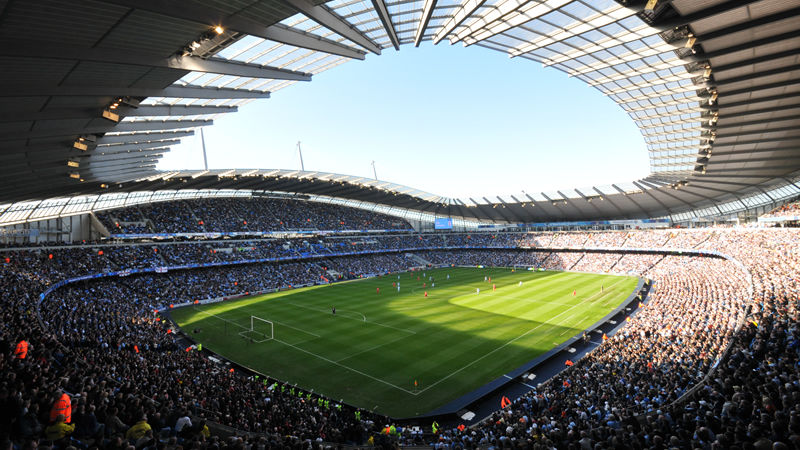
Etihad: edhiggins, “Manchester City Football Club Etihad Stadium”, original upload 25 July 2011. Source and original · CC BY 3.0. Original photograph embedded; hero display uses a crop and a dark overlay.

Stamford Bridge: Kinkreet, 2012. Source and original · CC BY-SA 3.0. Original file embedded; any display crop is offered under the same licence. Neither photographer endorses this analysis. Both images are historical illustrations. Chart and calculator are original constructions from the cited data.